 USA
USA  Canada
  Brazil
  Germany
  France
  Italy
Italy  Switzerland
  Sweden
  Spain
Spain  Great Britain
  Norway
  Russia
  South Africa
  Japan
Japan  New Zealand
EN 13594 is the European standard for protective motorcycle gloves, and EN 13634 is the one for protective motorcycle boots. Both set out the tests a maker carries out to show a product meets the standard; ask for the documentation rather than relying on marketing language. This guide explains what each standard covers, what its levels and optional properties mean, and how to read the markings on gloves and boots before buying.
Key Takeaways
- EN 13594 covers motorcycle gloves; EN 13634 covers motorcycle boots.
- Gloves are tested at Level 1 or Level 2; Level 2 gives more protection but may be heavier and more restrictive.
- Knuckle impact protection is optional at Level 1 and mandatory at Level 2.
- Boot ankle and shin impact protection are optional properties, so check whether a boot claims them.
- A standard describes a set of tests, not a promise of protection: always read the label and ask for documentation.
What EN 13594 and EN 13634 are
Both documents are European standards written for riders. According to the SATRA summary of EN 13594, EN 13594:2015 covers gloves designed to protect the hands and wrists in accidents involving motorcycles, other vehicles, road furniture and road surfaces. The SATRA summary of EN 13634 describes EN 13634:2017 as the standard for protective footwear for motorcycle riders, with requirements and test methods for the whole boot.
They sit alongside the standards for jackets and trousers rather than replacing anything. A rider assembling a kit therefore deals with several documents: one for garments, one for gloves, one for boots, and separate ones for armour inserts.
EN 13594 gloves: what is tested
Levels 1 and 2
The standard has two performance levels. As the SATRA article on motorcyclists' gloves puts it, Level 1 gloves provide a lower level of protection but greater dexterity, while Level 2 gloves provide increased protection with potential weight and restriction penalties. Neither level suits every rider: someone who needs fine control of levers may accept less protection, while another prioritises the heavier construction.
Cut, abrasion and seams
The tests are aimed at what happens in a slide. SATRA lists an assessment of cut resistance using a reciprocating circular blade machine and abrasion resistance using an impact abrasion machine. The summary page adds that palm areas are tested for impact abrasion on a Cambridge abrasion machine.
Knuckle protection and ergonomics
Knuckle impact protection is optional at Level 1 and mandatory at Level 2, with an impact applied to each of the four knuckles. The standard also checks ergonomics, so that a glove does not prevent safe use of the motorcycle controls. The materials are tested for harmful substances too, including chromium VI in leather.
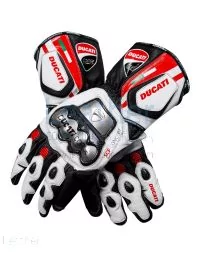
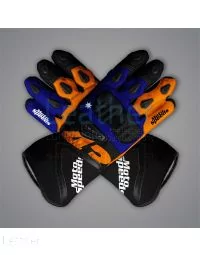
Leather gloves styled after racing designs, such as the or the , are a common starting point for riders who like race-inspired looks. The Ducati-style product page lists a carbon-reinforced metal knuckle protector and the Jack Miller-inspired page lists a TPU knuckle protector, and neither page names an EN or CE standard, so the test documentation is worth requesting before relying on either for protection. Riders who want a wider choice can browse and the men's range alike.
EN 13634 boots: what is tested
Boots are assessed as a complete item. The SATRA page describes tests on the integrity of the whole boot, including the bond strength between upper and outsole and a test of the transverse rigidity of the boot (SATRA does not explain it further on the summary page). The standard also includes assessment of the height of the upper.
For the upper, the specialised tests include impact cut resistance. Linings are assessed for properties such as tear strength and abrasion, and outsole materials are tested for resistance to abrasion.
Optional properties
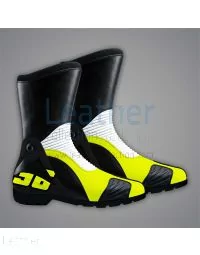
SATRA lists five optional properties that a maker can test for if it wants to make the claim: impact energy protection to the shin and ankle, resistance to water penetration, resistance to fuel oil of the outsole, slip resistance of the outsole, and water vapour permeability of the upper. Because they are optional, a boot without a claim for ankle protection does not carry that claim. Racing-style models, for example the , and the wider are worth reading with this list in hand. The Joan Mir-style boot page lists TPU moulded guards at the ankle, heel and shin and does not name a CE or EN standard, so the same documentation question applies.
How to read the label before buying
A standard number on a product page means little unless it is matched by a level, a pictogram or a test report. The practical checks are short:
| Item | What to look for | What to ask if it is missing |
|---|---|---|
| Gloves | EN 13594 and the level (1 or 2) | Whether knuckle protection is fitted and which level was tested |
| Boots | EN 13634 and any optional claims | Whether ankle or shin protection was tested |
| Both | Care label and maker instructions | Test documentation for the exact model |
Replica and race-inspired products need the same scrutiny as any other gear. The styling is editorial; the protection comes only from what was actually tested and documented for that product.
Fit matters as much as the standard
Even a glove or boot with a clear standard marking still has to fit. Gloves that bunch up or restrict the fingers make controls harder to operate, which is why the standard assesses ergonomics. Boots should allow a rider to work the shifter and rear brake comfortably. Try on or measure carefully, and check the maker's size guidance. Follow the care label and the maker's instructions for the specific leather and construction.
Frequently Asked Questions
Is EN 13594 the standard for motorcycle gloves?
EN 13594 is the European standard for protective gloves for motorcycle riders. It sets requirements and test methods for properties such as ergonomics, cut and abrasion resistance and knuckle impact protection (mandatory at Level 2). Gloves for other activities, such as work or driving, are covered by different standards.
What is the difference between Level 1 and Level 2 gloves?
According to SATRA, Level 1 gloves give a lower level of protection with greater dexterity, while Level 2 gloves give increased protection but may carry weight and restriction penalties. Knuckle impact protection is optional at Level 1 and required at Level 2.
Does EN 13634 describe a particular boot height?
The standard includes assessment of the height of the upper, along with tests on the whole boot such as transverse rigidity and sole bonding. Ankle and shin impact protection are optional properties, so a boot only carries that claim if the maker tested for it.
How can a rider tell what testing a glove or boot has had?
Look for the standard number on the label or product page, and for the level or pictogram that goes with it. If a listing does not state it, ask the seller for the test documentation before relying on it for protection.
Written by the Leather Collection Editorial Team.