 USA
 Canada
 Brazil
 Germany
 France
 Italy
 Switzerland
 Sweden
 Spain
 Great Britain
 Norway
 Russia
 South Africa
 Japan
 New Zealand

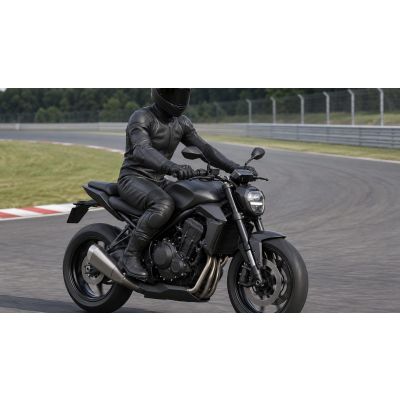
Short answer: MotoGP bikes are among the fastest racing motorcycles in the world, with the official top-speed record standing at 368.6 km/h (229 mph), set by Jorge Martin on an Aprilia at Mugello during the 2026 Italian GP weekend, according to MotoGP.com. At those speeds a fall means sliding, so race leathers rely on thick leather, strong seams and armor.
Top speed and typical speeds
MotoGP publishes records and race data on its official website, and the sport's rules come from the FIM. The previous mark was about 366 km/h (227 mph), set by Brad Binder in 2023 and matched by Pol Espargaro in 2024, both on KTMs at Mugello. Treat any other number you see with caution, since speeds depend on the circuit, the year, the slipstream and how the data was measured. Last checked: November 2026.
The speed at a given track is not the same everywhere. A track with a long straight produces the highest numbers, while a tight, twisty circuit never lets the bikes reach their top speed. Use the official MotoGP data for circuit-by-circuit figures.
What speed means in a fall
Hitting the ground at racing speed does not stop a rider at once. They slide, sometimes for a long distance. Three things happen:
- Abrasion: the surface of the road grinds away at whatever touches it.
- Heat: friction heats the material that is sliding.
- Impact: hitting a barrier, a bike or the ground itself is a blunt hit that leather alone does not absorb.
Riders do crash at lower speeds, and a fall can still be serious. Speed is one factor. This article does not make a safety claim for any garment. Read the standards and the maker's information for your own gear.
Why a slide is the real test
People often picture a crash as a single hard hit. On a racetrack, it is usually a long slide first, because tracks have runoff areas designed to let riders slow down. That is why abrasion resistance sits at the top of the list for race leathers. A suit that survives a slide intact keeps the skin covered, and the armor underneath does its job at the moment of contact with a barrier or the ground.
It also explains why the thickness of the leather is not the whole story. The same hide can behave differently depending on how it is cut, how many layers cover an area and where the seams run. A seam placed across a high-wear spot such as the shoulder or hip is a weak point, so makers route seams away from those areas or reinforce them. When you compare suits, look at where the panels join as well as how thick the leather is.
Speed to suit feature: a simple map
| What a fall brings | Suit feature that responds |
|---|---|
| Sliding on tarmac | Thick leather, often in double layers over key areas |
| Seams pulling apart under load | Strong, often multi-row stitching and reinforced seams |
| Knocks to bones and joints | Armor at shoulders, elbows, knees and the back |
| Heat and abrasion at slide points | Extra panels or sliders in the areas that touch first |
| Movement at speed | Fit: a suit that flaps can shift armor away from where it should be |
How race leathers are built for it
Thickness is the obvious feature. Race leather is thicker and stronger than fashion leather, and it is cut and sewn to move with a rider tucked on a bike. Stitching is the second. A seam that opens in a slide stops being protection, which is why we wrote what riders should know about stitching. Armor is the third, covered in the science behind motorcycle suits. Together, they form a system rather than a single feature.
Standards and testing
| What is checked | Where it comes from | In plain words |
|---|---|---|
| Garment abrasion and construction | EN 17092, with classes AAA, AA, A, B and C | How the clothing performs in tests simulating a slide |
| Impact protectors | EN 1621 series | How much force gets through an armor protector |
| Race homologation | FIM rules for racing suits | Requirements for suits used in FIM events |
The SATRA bulletin on impact abrasion resistance describes the Darmstadt test as simulating a rider of average size sliding on concrete, with pass or fail results at set speeds. Check the official FIM and standards pages for the current detail. We found no current public FIM suit document to quote, so we describe the FIM rules only in general terms.
What street riders can learn
You do not need to ride at MotoGP speeds to get hurt. Many serious falls happen at modest speeds, and the same principles apply: abrasion-resistant material, good seams, armor and a fit that keeps everything in place. Our article on the what CE armor is and why it matters is a good place to start.
The role of fit at speed
A suit that fits badly can undo its own protection. At speed, loose leather flaps in the airflow, and armor can drift off the shoulder or knee it was meant to cover. A suit that is too tight limits movement and gets uncomfortable on a long ride. Race riders have suits cut to their measurements for this reason, and the same idea applies to anyone who wants a suit for track days. Our custom race suits start from your measurements rather than a size label.
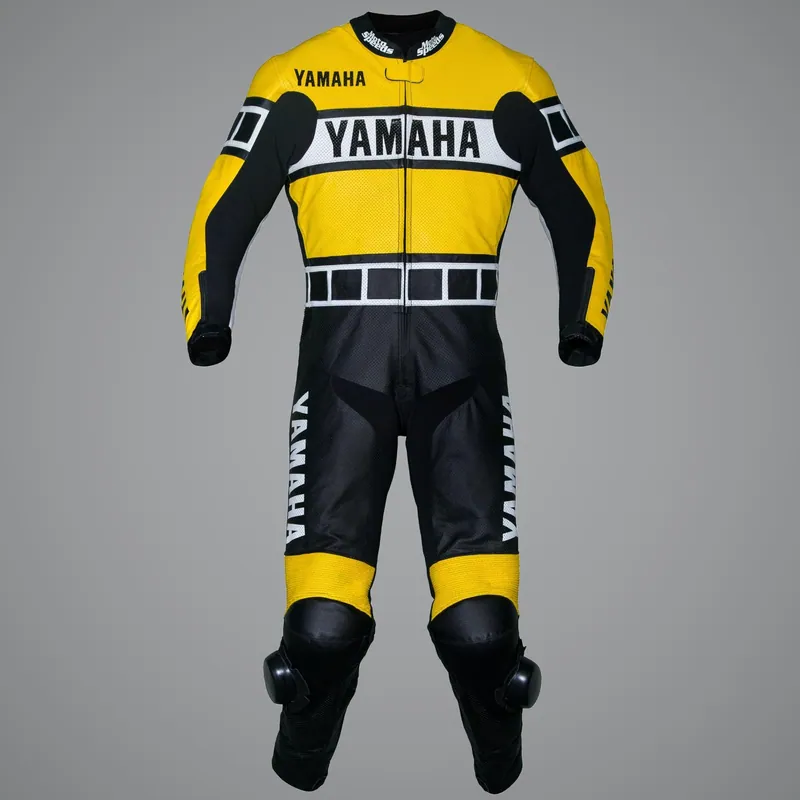
Replica suits and race-grade suits
A replica suit copies a rider's look, which is part of the fun of the sport. A race-grade suit is built and certified for racing. The two are not always the same, so check the product details instead of assuming. Our comparison of a replica suit and a custom race suit explains the difference. See each product page for what applies to that suit. You can also read what MotoGP riders wear and why.
FAQs
What is the top speed of a MotoGP bike?
The official record is 368.6 km/h (229 mph), set by Jorge Martin at Mugello in 2026. Records can be broken, so check the official MotoGP site for the current figure.
How fast is MotoGP compared with Formula 1?
Both reach very high speeds, but top speeds depend on the circuit and the year. Use official data from each series for a like-for-like comparison.
What do MotoGP riders wear to protect themselves?
Leather race suits with armor, plus helmets, gloves and boots. Many suits are built with extra layers and reinforced stitching in the areas most likely to hit the ground.
Do replica suits protect like race suits?
Not necessarily. A replica suit is designed to look like a rider's suit, and protection depends on how it is built. Our suits have removable CE Level 1 armor (EN 1621-1) but no whole-garment EN 17092 class.
Explore our MotoGP leathers or browse leather race suits to compare styles.