
 USA
 Canada
 Brazil
 Germany
 France
 Italy
 Switzerland
 Sweden
 Spain
 Great Britain
 Norway
 Russia
 South Africa
 Japan
 New Zealand

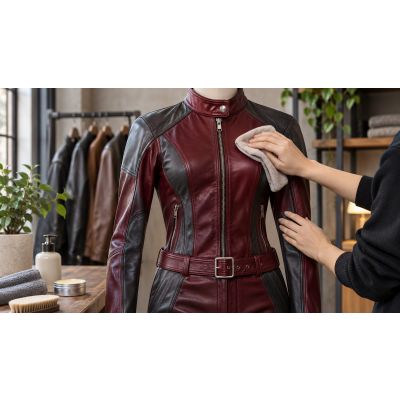
Short answer: wipe sweat off the lining and the leather soon after an event, never use heat to dry it, store it on a padded hanger or a well-shaped mannequin away from sun, and treat colored panels gently. Spot-test any cleaner on a hidden area first, and check the product page for any care notes.
This guide is for owners of leather cosplay and collectible display suits, such as our superhero motorcycle suits in the non-riding builds. These suits are worn for a day, then stored or displayed for months. That pattern creates its own care problems: sweat that sits, creases from a bad hanger, and fading from a sunny window.
The five-point care checklist
- Air the suit and wipe sweat soon after wearing.
- Dry slowly, at room temperature. No heaters, hair dryers or direct sun.
- Spot-clean first, and test on a hidden area.
- Condition sparingly, and keep product off colored panels and logos until you have tested it.
- Store or display away from light, with proper shoulder support and airflow.
After an event
A day in a leather suit under convention lights means a lot of sweat. Salt and moisture are the enemies of leather and lining. Do this the same evening.
- Hang the suit on a wide, padded hanger in a room with moving air.
- Turn out pockets and open zips so the inside can dry.
- Wipe the inside lining with a cloth that is slightly damp with clean water, then dry with a second cloth.
- Wipe the outside of the leather with a soft, dry cloth.
What not to do: do not put the suit near a radiator, in a dryer or in front of a hair dryer. Heat dries the natural oils out of leather and can leave it stiff or cracked. Do not leave it in a closed bag overnight while damp. For general guidance on drying and cleaning, see our posts on how to clean a leather jacket and how to clean a motorcycle race suit.
Sweat smell is easier to prevent than to remove. If an odor remains after airing, a light wipe of the lining and a few more days of airing usually helps. A fabric refresher spray on the lining only, not on the leather, may help, but test first.
Cleaning colored and sculpted panels
Colored leather can show dye transfer, especially pale panels next to dark ones. Be careful and slow.
- Test any cleaner in a hidden spot, such as an inside seam allowance, and wait until it is fully dry before judging.
- Use a soft cloth, not a brush. Blot, do not rub.
- Use as little water as you can. Never soak leather.
- On the sculpted parts, press lightly. Pressure can flatten the padding under the leather.
Do not assume that colors are fully dye-fast. If a cloth picks up color during testing, stop and contact us.
Conditioning
Leather needs conditioning from time to time, but a display suit that spends most of its life on a mannequin needs it less than a jacket worn weekly. Over-conditioning can darken leather and leave a greasy surface.
- Use a small amount of a conditioner made for finished leather.
- Apply with a soft cloth in thin layers.
- Test on a hidden area first, especially on light or colored panels.
- Keep product off logos, stitched details and any non-leather parts.
For a general routine that also covers other gear, see how to care for leather gear.
Storage
If you store the suit between events, the aim is shape, air and darkness.
- Use a wide, padded hanger so the shoulders keep their form. A thin wire hanger leaves marks.
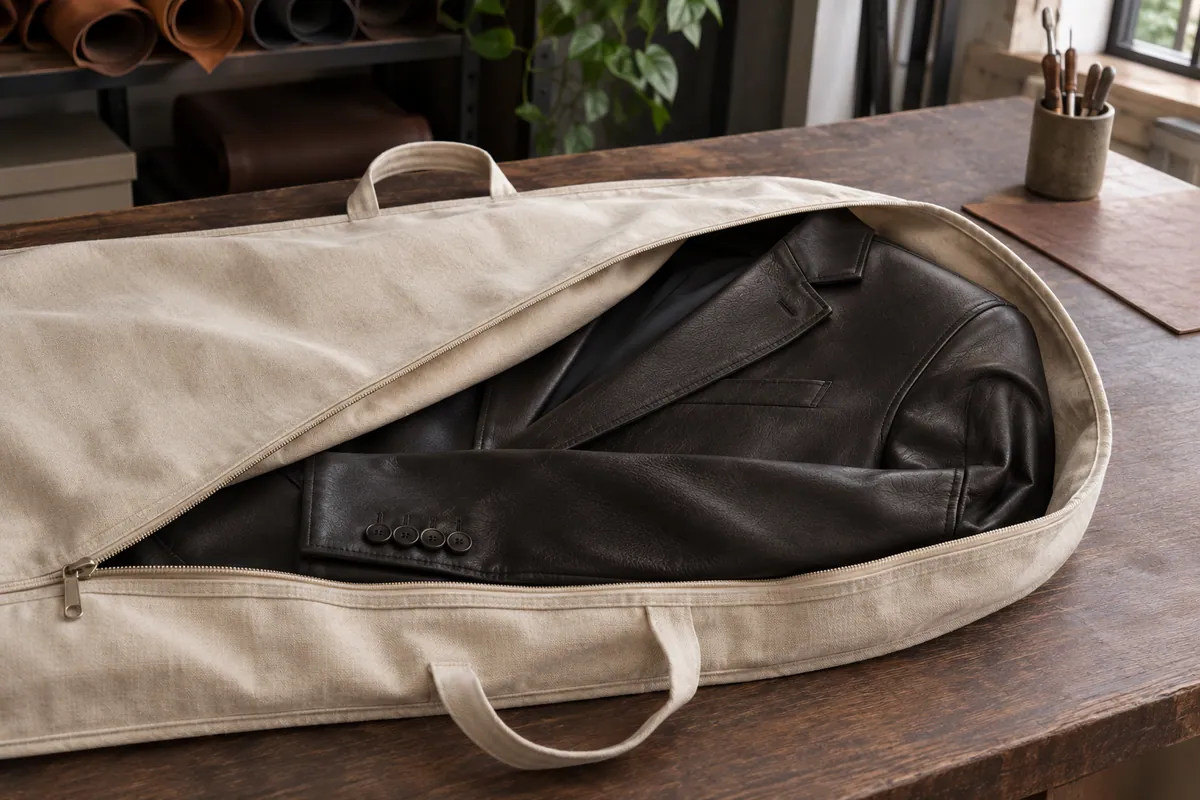
- Use a breathable cotton garment bag. Plastic traps moisture and can cause mildew.
- Keep it in a cool, dry room. Basements and attics swing in humidity.
- Leave room around the suit. A crowded closet crushes sculpted parts.
Our post on storing a leather jacket between seasons applies here too, and the racing gear storage guide helps if you are comparing storage options.
Display: mannequins, light and posing
A suit on show is a different case from one in a closet.
| Mannequin type | Good for | Watch for |
|---|---|---|
| Padded torso form with shoulder caps | Jackets and upper suits | Needs legs or a stand for a full suit |
| Full-body mannequin | Full suits | Check the shoulder width against the suit |
| Wide padded hanger on a wall | Light, short-term display | Weight pulls on shoulders over time |
Place the suit away from windows. Daylight fades dye over time, and the effect is slow and steady. Choose a spot with even, low light and stable temperature, and avoid direct spotlights, which heat the surface. Every few weeks, change the pose or the hanger position slightly so creases do not set in one place. If you can, rotate the suit, with a few days on a hanger between poses.
Conservators who care for museum textiles and leathers recommend low light, stable humidity and good airflow. Those are sound guidelines for a home display too.
Capes, hardware and accessories
Only a few designs have a cape (Batman Classic, Batman Dark Knight, Superman Black and Thor). If yours has one, take it off for storage and keep it flat or loosely rolled, not folded sharply, so the creases do not set. Store gloves and boots stuffed with tissue to hold their shape. Check zippers and snaps once in a while, and keep them dry.
Packing for a convention
- Roll or fold along natural lines. Avoid sharp folds across sculpted parts.
- Pad the bends with acid-free tissue or soft cloth.
- Use a breathable garment bag, not plastic.
- Pack it last, on top, so nothing heavy sits on it.
- Hang it in the hotel as soon as you arrive. A steamy bathroom helps relax light creases, but never apply direct steam or heat to leather.
Common mistakes to avoid
| Mistake | What happens | Do this instead |
|---|---|---|
| Hanging on a thin hanger | Shoulders sag and crease | Wide padded hanger or shaped form |
| Drying by a heater | Leather stiffens and may crack | Air dry at room temperature |
| Storing in plastic | Trapped moisture, mildew risk | Breathable cotton bag |
| Heavy conditioning | Dark patches, greasy feel | Thin layer, tested first |
| Window display | Faded colors over time | Low, even light away from windows |
A final habit worth building: look at the suit properly every few months. Check seams, zippers and any stitched details. A small loose thread caught early is a two-minute fix, and the same thread ignored can unravel a seam.
When to ask for help
Contact us or a leather specialist if you see cracks, mildew, persistent odor, dye transfer on clothing or a stain that did not respond to light cleaning. Do not apply strong solvents yourself.
A simple yearly routine
Once or twice a year, take the suit out, check seams and zippers, wipe it with a soft cloth, apply a thin layer of conditioner if it feels dry, and change how it hangs. It takes about twenty minutes and does more for a suit than any product.
FAQs
How do I get sweat smell out of a leather suit?
Air it in a ventilated room, wipe the lining with a cloth that is slightly damp, and dry it slowly. Do not use heat. Test any cleaner or spray on a hidden area first.
Can I leave a leather suit on a mannequin?
Yes, if the mannequin supports the shoulders properly, the room is cool and dry and the suit is away from light. Change the pose now and then.
Does sunlight fade colored leather?
Prolonged light can fade dyes, so keep the suit away from windows. We do not claim fade resistance.
How often should I condition it?
Rarely for a display suit. Condition when the leather feels dry, using a thin layer, and test first.
How do I fold or pack it for a convention?
Fold along natural lines, pad the bends, use a breathable bag and hang it up as soon as you arrive.
Choose a suit to wear or display from our superhero motorcycle suits.