
 USA
 Canada
 Brazil
 Germany
 France
 Italy
 Switzerland
 Sweden
 Spain
 Great Britain
 Norway
 Russia
 South Africa
 Japan
 New Zealand

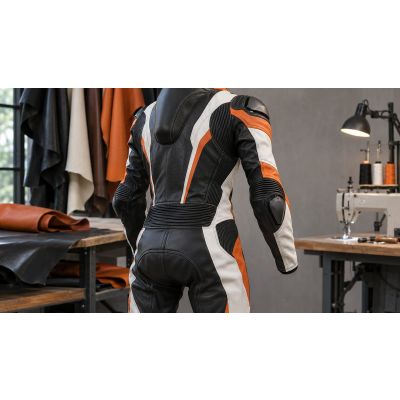
Short answer: Decide first whether the suit is for riding or for display. Then check four things on the product page: the rider and season, the base colors and panel layout, the sponsor placement, and the hump and knee sliders. If you plan to ride in it, protection and fit matter more than exact print accuracy.
A MotoGP replica suit is a one-piece leather suit styled after a rider's race livery. Fans search for it as a "motogp suit", "motogp leathers" or "motogp race suit", and the products behind those terms vary a lot. Some are built to be ridden hard on a track day. Others are made to hang in a display case or to finish a costume. This checklist helps you tell them apart before you pay.
Start with how you will use it
Every other decision follows from this one. A suit that is perfect for a shelf can be a poor choice on a bike, and the reverse is also true.
- Riding or track days: fit, protection and comfort in the riding position come first. Exact sponsor positions are a bonus.
- Collecting or display: livery accuracy comes first. Fit still matters, because a suit that hangs badly looks wrong on a mannequin too.
- Costume or events: comfort for walking and sitting, and a recognizable look. Weight and heat are the practical issues.
- Mixed use: be honest about which one wins on the day you will wear it most. If you ride, treat it as riding gear.
The four-point accuracy checklist
Use these four checks on any replica, from any maker. They take a few minutes and prevent most disappointments.
1. Rider and season
Liveries change every year, and a rider's suit can change within a season for special events. Make sure the product page names the rider and the year, not just the team. Our leather race suits and MotoGP leathers pages are organized so you can find a rider and season quickly, and the MotoGP 2026 collection covers the current year.
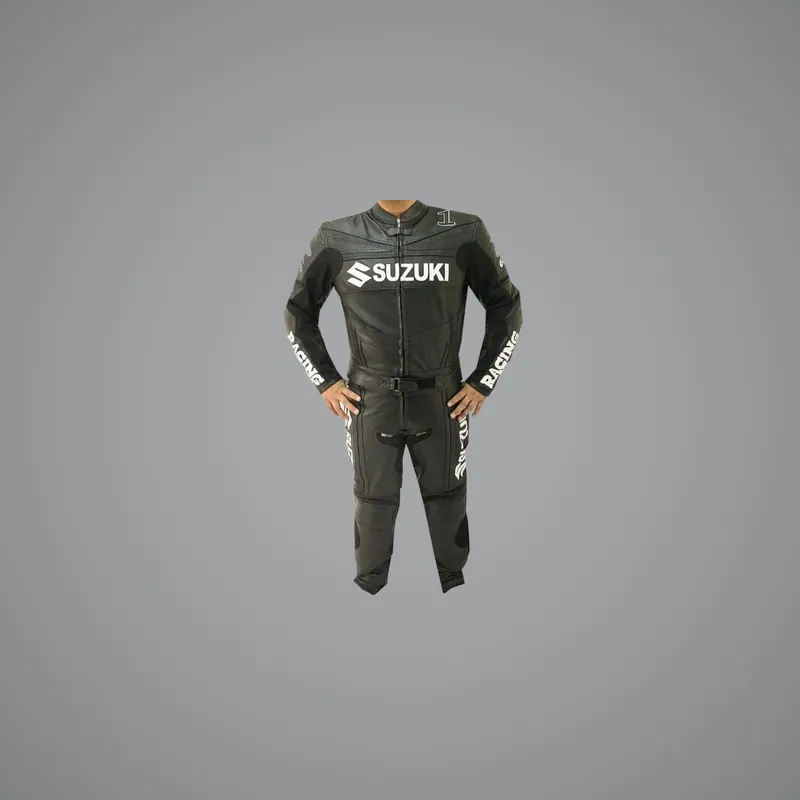
If the page only says "MotoGP style" and shows no year, treat it as a general design, not a copy of a specific season.
2. Base colors and panel layout
Look at the main color blocks first. Where does the base color change? Is the shoulder panel a different color from the chest? Are the legs one color or split? Panel layout is the shape of the suit, and it is what you recognize from across a paddock. Check it against a photo you trust, such as a rider's profile on the series website.
Small shade differences between a screen and real leather are normal. Dye lots and lighting change how a color looks.
3. Sponsor placement
Sponsor graphics are where replicas differ most. Check these points on the product images:
- Which areas carry graphics: chest, back, shoulders, legs, hump?
- Are the graphics printed, embroidered or appliqued? This affects weight, feel and how they age.
- Are real brand logos shown at all, or are they replaced with generic shapes? On our MotoGP-style gear, sponsor logos are printed, or embroidered or stitched on as patches.
Be careful with the word "official". A replica is a copy made by a third party in the style of a team's suit. It is not team merchandise unless the seller says it is licensed, and you should ask if the page does not say. We do not describe our suits as officially licensed.
4. Hump and knee sliders
The hump on the back and the sliders on the knees are part of the silhouette. A hump that is too small or missing changes the whole look. For a riding suit, the hump also has a job, so see our guide to the aerodynamic hump on a racing suit if you are unsure what it does. Knee sliders are replaceable wear items on a riding suit. On a display suit they are mostly cosmetic.
Livery details that change by year
This table lists the kinds of details that tend to change between seasons. It is a guide to what to compare, not a record of any specific year.
| Detail | How it can change | What to check |
|---|---|---|
| Base colors | Shades shift, or a second color is added | Compare to a photo from that season |
| Title sponsors | Team sponsors change or are replaced | Names and positions on chest and back |
| Rider name and number | Numbers change when riders move teams | Number on the hump and on the legs |
| Panel lines | Cut lines and trim are redrawn | Shoulder, arm and thigh panels |
| Special editions | One-off race liveries | Whether the page says which race or event |
For the current season, check the official MotoGP website for rider and team pages before you decide.
Riding replica or display replica
This is the most important difference, and it is often hidden in small print. A suit meant for riding should say what protection it includes: armor at the shoulders, elbows, knees and hips, and a back protector or a pocket for one. The product page should also say what standard, if any, the suit is tested to. In Europe, motorcycle clothing is assessed under EN 17092, and protectors under EN 1621. Read our explanation of what the CE label means on one-piece race suits before you rely on any label. Our suits have removable CE Level 1 armor (EN 1621-1) but no whole-garment EN 17092 class.
| Riding replica | Display or costume replica | |
|---|---|---|
| Main goal | Protection and fit on the bike | Look and accuracy |
| Armor | Should be included and fitted | May be left out |
| Fit | Snug in the riding crouch | Comfortable standing and sitting |
| Print accuracy | Useful but secondary | Often the priority |
| Cost drivers | Leather quality, armor, stitching | Detail and finish |
No suit can promise to prevent injury in a crash, and we do not claim that one can. If you ride, ask the maker exactly what armor is fitted and what testing the suit has, and keep that answer.
Sizing a replica suit
Standard sizes work when your measurements sit close to the chart. A race suit is cut to be close, so a few inches of error in the torso or the legs shows up quickly. Take your measurements with a soft tape, compare them to the chart, and size for the area that is hardest to alter, usually torso length. Our guide to selecting the correct racing suit size walks through each measurement, and the size chart shows the standard ranges.
If your measurements fall between sizes, or one part of your body does not match the chart, a made-to-measure suit is worth considering.
Reading product photos and renders
Many replica listings use design renders instead of photos of the finished suit. A render is a computer picture of the design. It shows the layout, but leather grain, stitching and small details can look different on the real suit. Here is how to read them:
- A perfectly smooth surface with no creases usually means a render.
- Photos on a mannequin show the finished cut better than renders do.
- Ask the seller whether the images are renders, and what can differ in the finished suit.
Replica or custom
A replica is the right buy when you want a recognizable rider and season and the standard design suits you. A custom suit is the better choice when you want your own colors, your own name and number, or a fit that standard sizes cannot give. Our comparison of a MotoGP replica suit and a custom race suit sets out the trade-offs, and the custom race suits page shows how a made-to-measure order works. For the build and sizing of a replica in detail, read how replica suits are built and sized.
Pre-order checklist
Copy this list and tick it off before you pay.
- I know whether the suit is for riding, display or costume.
- The page names the rider and the year.
- The colors and panel layout match a photo I trust.
- I know where the sponsor graphics sit and how they are made.
- The hump and knee sliders are what I expect.
- For riding: I have a written answer on armor and testing.
- I have taken my measurements and compared them to the chart.
- I know whether the images are renders and what can differ.
- I understand that the suit is a replica and not official team merchandise.
Ready to look? Find your rider and season in our MotoGP leathers, or browse the wider MotoGP gear range.
FAQs
What is a MotoGP replica suit?
It is a one-piece leather suit made in the style of a MotoGP rider's race suit. It copies the colors, panel layout and, in some cases, the sponsor graphics of a particular rider and season. It is made by a third party and is not the suit the rider wears.
Are replica suits safe to ride in?
It depends on how the suit is made. A riding replica should have armor and a stated testing standard, and should fit closely. A display or costume replica may have neither. Ask the maker what armor and testing the suit has, and do not assume any suit will prevent injury.
Are replica suits officially licensed?
Not unless the seller clearly says so. Leather Collection suits are original designs in the style of the series and are not official team merchandise.
How accurate are MotoGP replica suits?
Accuracy varies by maker and by price. Colors and panel layout are usually close. Sponsor graphics, small trim details and exact shades are where copies differ. Compare the product images to a photo from the season you want.
Should I buy standard sizes or made to measure?
Standard sizes suit riders whose measurements match the chart. Made to measure suits riders between sizes, or those with an unusual torso or leg length. Our size chart helps you decide which side of that line you are on.
Can I change the sponsors on a replica suit?
That depends on the maker. At Leather Collection, sponsor logos on MotoGP-style gear are part of the design and cannot be left off or changed on request.