 USA
USA  Canada
  Brazil
  Germany
  France
  Italy
Italy  Switzerland
  Sweden
  Spain
Spain  Great Britain
  Norway
  Russia
  South Africa
  Japan
Japan  New Zealand
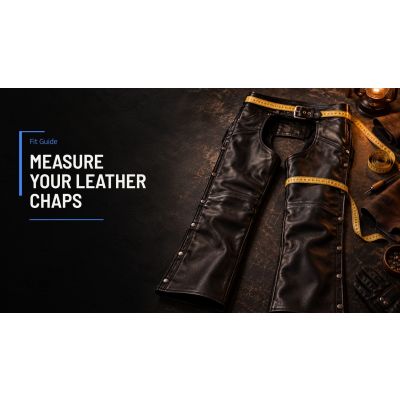
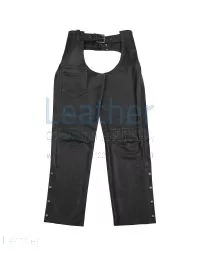
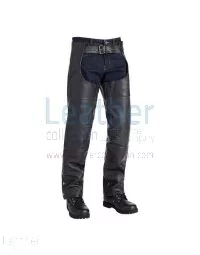
Leather Collection's size guide has no leather chaps size chart. Chaps can be ordered made to measure: you take your own body measurements, with a second person helping, and send them on the shop's measurement form. Some chaps listings also offer standard sizes, so check the product page for the size options. This guide covers who measures, how to do it, which measurements to take and how to record them.
That is a different process from buying jackets or trousers, which follow the shop's standard size guide. Chaps have no seat and two separate legs held at the waist by a belt, as described in Wikipedia's overview of chaps, so the waist, the leg shape and the lengths each have to suit the individual rider.
Key Takeaways
- The shop's size guide has no chaps chart; chaps can be ordered made to measure, and some listings also offer standard sizes.
- A second person should measure you, on bare skin, relaxed, with feet together.
- Use a flexible tape with constant pressure, follow the diagrams on the measurement form and write every figure down.
- The trousers chart only helps as a reference for waist, hip and inseam; it is not a chaps chart.
Why Chaps Are Made to Measure
A standard size has to average out many bodies. Chaps wrap each leg separately, and thigh, knee and calf differ from rider to rider far more than a single waist size suggests, as does leg length. That is why a made-to-measure option is useful for chaps.
The shop's made-to-measure page explains the process for made-to-measure gear. You can browse or to see the styles, then check each product page for the size options and, if you want a made-to-measure fit, supply your own figures.
How to Measure for Motorcycle Chaps
Who measures and what to wear
The made-to-measure page asks for a second person to take the measurements. Measuring your own thigh or ankle means bending over the tape, which shifts the numbers. Measure on bare skin rather than over clothing, because even thin trousers add to the reading. Stand with your muscles relaxed and your feet together, and stay in that position for every figure.
Tape and technique
Use a flexible tape measure, the kind a tailor uses, not a metal builder's tape. Keep constant pressure: the tape should touch the skin all the way round without pinching. Follow the diagrams on the online measurement form or the PDF measurement form for where each tape sits, and write each figure down as you go instead of relying on memory. If a figure looks wrong, measure it again.
Which measurements to take
The made-to-measure page lists the same circumferences and lengths for all gear and does not single out chaps. The leg and waist points are the ones that usually relate to chaps: waist, hip, thigh, knee, calf and ankle, plus lengths such as height, waist-to-knee, knee-to-ankle, crotch-to-knee and crotch-to-ankle. Upper-body points such as neck, chest, bicep and wrist are on the same list, so confirm with the shop which fields apply to your order.
Using the Trousers Chart as a Reference
The shop's size guide does have a trousers chart. For men and women it lists waist, hip, inseam and height for each size. This is the trousers chart, not a chaps chart, so it should not be used to pick a chaps size. It is useful for one thing: checking that you are taking the shared body measurements in the same way.
The shop defines them like this: waist is measured about 5 cm below the navel during normal breathing with a relaxed abdomen; hip is the widest point of the hips; inseam runs from the highest point in the crotch down to just above the ankle bone; height is measured from the top of the head to the soles of the feet, without shoes, standing upright with feet together. Use the same method for chaps and the figures will match what the maker expects.
The trousers chart does not include thigh, knee, calf or ankle, so those four have to come from your own tape.
A Table to Record Your Measurements
Copy this table, fill in the last column as your helper reads out each figure, and keep it with the form. Waist, hip and inseam follow the shop's definitions; for the other points, follow the diagrams on the measurement form, and ask the shop which fields apply to chaps.
| Measurement | Where to measure | Note | Your figure |
|---|---|---|---|
| Waist | Around the waistline, about 5 cm below the navel, breathing normally, abdomen relaxed | On the trousers chart | |
| Hip | Around the widest point of the hips | On the trousers chart | |
| Inseam | From the highest point of the crotch down to just above the ankle bone | On the trousers chart | |
| Thigh | Around the thigh, as shown on the form diagram | Not on the trousers chart | |
| Knee | Around the knee, as shown on the form diagram | Not on the trousers chart | |
| Calf | Around the calf, as shown on the form diagram | Not on the trousers chart | |
| Ankle | Around the ankle, as shown on the form diagram | Not on the trousers chart | |
| Waist-to-knee, knee-to-ankle, crotch-to-ankle | Along the leg, as shown on the form diagram | Lengths listed on the made-to-measure page |
Submitting Your Measurements and Checking Them
The shop offers an online form and a downloadable PDF. The online measurement form suits anyone who wants to type the figures straight in. The PDF measurement form can be printed and filled in by hand while your helper measures, then sent in. Either way, the figures come from you, so accuracy at this stage matters.
Before sending, read the list through and look for odd values: a calf larger than the thigh, a knee wider than the hip, or a length that does not add up when you add the parts. If a figure looks wrong, measure that point again. If you are unsure which fields apply to chaps, ask the shop before ordering.
For other gear, such as or , check the product page for the size options; the listings show standard sizes and a custom size option. Chaps are an outer layer worn over trousers, and a full set of riding kit can be put together from or .
Common Measuring Mistakes
- Measuring over jeans or riding trousers instead of on bare skin.
- Pulling the tape tight, which gives readings that are too small.
- Standing with weight on one leg or the knees bent, which changes the lengths.
- Measuring alone, which tends to move the tape.
- Skipping the written record and trying to remember the figures.
Follow the garment's care label and the maker's instructions once the chaps arrive; fit and feel can change as the leather softens with wear.
Frequently Asked Questions
Is there a leather chaps size chart?
Leather Collection's size guide covers jackets, vests, trousers and suits, but it has no chaps table. Chaps can be ordered made to measure, using the online or PDF measurement form, and some listings also offer standard sizes, so check the product page for the size options.
Who should take the measurements?
A second person. The made-to-measure page asks for a helper because it is hard to read a tape accurately around your own thigh, knee or ankle. Stand relaxed with your feet together while they measure, and have them write each figure down as they take it.
Should I measure over clothing?
No. The made-to-measure instructions call for measuring on bare skin, standing with the muscles relaxed. Clothing adds thickness and shifts the tape, so the figures would come out larger than your body. Use a flexible tape with steady pressure, without pinching.
Can I use the trousers size chart for chaps?
Only as a reference for the shared body measurements. The trousers chart lists waist, hip, inseam and height, and it does not include thigh, knee, calf or ankle. Take your own figures rather than choosing a trousers size for chaps, and use the shop's online or PDF form to record them.
Where do I find the measurement form?
The shop provides an online measurement form and a downloadable PDF version. Both are on the shop's website. Use whichever suits you: type the figures in online, or print the PDF and fill it in by hand while your helper measures.
Written by the Leather Collection Editorial Team.