 USA
USA  Canada
  Brazil
  Germany
  France
  Italy
Italy  Switzerland
  Sweden
  Spain
Spain  Great Britain
  Norway
  Russia
  South Africa
  Japan
Japan  New Zealand
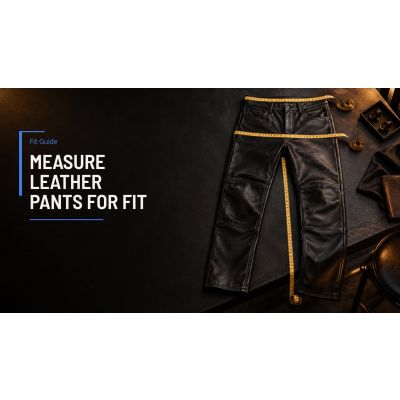
A leather trousers size chart matches three body measurements, waist, hip and inseam, to the sizes a maker offers. Measure each number, find the row that covers all three, and when the numbers point to different rows, check the one that leaves the least room, usually the hip. The charts below come from the Leather Collection size guide and list trousers columns only.
Leather usually has less give than stretch fabric, so check hip and thigh against the chart and follow the maker's fit notes. A few minutes with a tape measure before ordering matters more than guessing from the jeans already in the wardrobe.
Key Takeaways
- Trousers sizing rests on waist, hip, inseam and height; the chart lists all four for every size.
- The shop measures the waist about 5 cm below the navel, so measure there rather than at the belt line of old jeans.
- Size labels differ between makers, so use the chart of the maker you are buying from.
- A size that sits between two rows needs a check of the hip and inseam, not only the waist.
- If no row suits your proportions, the shop offers a made-to-measure route with its own measurement form.
Why one size label does not fit every maker
Clothing sizes are labels, not measurements. The overview of clothing sizes on Wikipedia explains that sizing systems vary by country and that the same nominal size can have very different dimensions from one company to another. For leather trousers this means the waist number from your jeans is only a starting point; the numbers that count are your body measurements and the chart of the maker.
The shop's chart gives US, EU and international (INTL) labels side by side, each tied to centimeter measurements. Browse or and compare the cuts with the rows below.
How to measure waist, hip, inseam and height
Use a soft tape measure and stand relaxed. A second person makes the inseam and height far easier to take. The shop's size guide describes each measurement as follows.
| Measurement | How the shop describes it |
|---|---|
| Waist | Around the waistline about 5 cm below the navel, during normal breathing, with a relaxed abdomen |
| Hips | Around the widest point of the hips |
| Inseam | From the highest point in the crotch down to just above the ankle bone |
| Height | Vertically from the top of the head to the soles of the feet, without shoes, standing upright with feet together |
Write the numbers down in centimeters, because the chart uses them. One inch is 2.54 cm, so a 32 inch waist is about 81 cm.
Men's leather trousers size chart
The table lists the trousers measurements for each men's size, in centimeters.
| US | EU | INTL | Waist (cm) | Hip (cm) | Inseam (cm) | Height (cm) |
|---|---|---|---|---|---|---|
| 32 | 42 | XS | 72 | 86 | 74.6 | 165 |
| 34 | 44 | S | 76 | 90 | 77.8 | 168 |
| 36 | 46 | S | 80 | 94 | 79.2 | 171 |
| 38 | 48 | M | 84 | 98 | 80.6 | 174 |
| 40 | 50 | M | 88 | 102 | 82 | 177 |
| 42 | 52 | L | 92 | 106 | 83.4 | 180 |
| 44 | 54 | L | 96 | 110 | 84.8 | 183 |
| 46 | 56 | XL | 100 | 114 | 86.2 | 186 |
| 48 | 58 | XL | 104 | 118 | 86.2 | 187 |
| 50 | 60 | XXL | 108 | 122 | 86.2 | 188 |
Read the table by hip first, because leather usually has less give than stretch fabric and the hip is hard to adjust later. For example, a 90 cm hip is the row for US 34 (EU 44, INTL S), which lists a 76 cm waist, a 77.8 cm inseam and a 168 cm height.
Women's leather trousers size chart
The women's trousers table uses the same columns, again in centimeters.
| US | EU | INTL | Waist (cm) | Hip (cm) | Inseam (cm) | Height (cm) |
|---|---|---|---|---|---|---|
| 6 | 38 | XXS | 58 | 84 | 74 | 158 |
| 8 | 40 | XS | 62 | 88 | 75.5 | 161 |
| 10 | 42 | S | 66 | 92 | 77 | 164 |
| 12 | 44 | M | 70 | 96 | 78.3 | 167 |
| 14 | 46 | M | 74 | 100 | 79.6 | 170 |
| 16 | 48 | L | 78 | 104 | 80.9 | 173 |
| 18 | 50 | XL | 82 | 108 | 82.2 | 176 |
| 20 | 52 | XL | 86 | 112 | 82.2 | 177 |
The waist-to-hip difference is larger in this chart than in the men's one (26 cm against 14 cm in every row). Compare the hip number with the row first, then the waist and inseam.
When the numbers fall between sizes
If waist and hip point to different rows, look at which measurement the cut leaves least room for. On a close-fitting style that is usually the hip or thigh. The size guide's own advice for boots and gloves is that a measurement standing between two sizes should lead to the bigger one, but that line does not mention trousers, so the size guide is the place to read the full wording before applying it here.
When no row matches your proportions, for example a hip from one size and an inseam from another, the made-to-measure page explains the alternative. It asks for a second person to take the measurements on bare skin, standing with muscles relaxed and feet together, using a flexible tape held with constant pressure and not pinching. Record every number in writing and follow the diagrams on the page, then use the online measurement form, or the downloadable PDF form.
How rise and cut change the fit
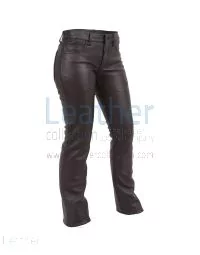
Rise is the distance from the crotch seam to the top of the waistband. Two pairs with the same waist number but different rises sit in different places on the body, so , which the product page describes as low-rise, sit differently from a style with a higher waistband at the same size. A slim leg follows the thigh closely, while a straight leg such as , which its page lists as a straight-leg silhouette, leaves more room below the hip. The chart does not list rise or thigh, so read the product page for those details.
Fit for riders
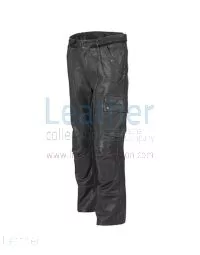
Riders sit, lean forward and bend the knees for long periods, which changes how trousers behave compared with standing. Check the waistband, the knees and the hem while seated and leaning forward. This applies to any trousers, including . If you are buying for riding, check whether the product page or order form lists an armour option and ask for the documentation that applies to it before ordering. Armour has to sit over the area it is meant to cover, which depends on a well-fitting pair.
Checking the fit
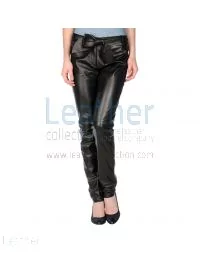
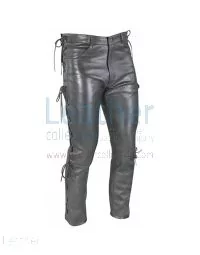
Put the trousers on and walk, sit, squat and climb a step. You are looking for closeness without pulling. Among women's styles, the product page for lists a matching leather belt, and the page for lists full-side lace adjustments. Neither changes hip or thigh measurements as such, so those still need to match the chart.
| Where it is tight | What it usually means | What to check |
|---|---|---|
| Waistband pinches when seated | Waist or rise too small for your torso | Waist number against the chart row |
| Material pulls across the hips | Hip larger than the size allows | Hip column of the next row |
| Hem rides up or bunches | Inseam does not suit your leg or footwear | Inseam and height columns |
Frequently Asked Questions
How do I find my size in leather trousers?
Measure your waist about 5 cm below the navel, the widest point of your hips, your inseam and your height, then find the row in the maker chart that covers them. Start with the hip, since leather usually has less give than stretch fabric. If the numbers split between rows, read the size guide again or consider the made-to-measure route.
Do leather trousers stretch with wear?
Stretch varies with the leather and the cut, so a fit that is clearly too small should not be left to wear in. Trousers that pinch at the waist or restrict the thighs when you sit are likely to stay uncomfortable. It is safer to choose a row that fits comfortably from the first fitting.
How do I measure the inseam for trousers?
Measure from the highest point in the crotch down to just above the ankle bone, with a soft tape and, ideally, a second person helping. Stand upright and relaxed. Compare the result with the inseam column of your size row, and note your height as well, since the chart pairs the two.
What if no size on the chart fits me?
The shop offers a made-to-measure page with a longer list of body measurements. A second person takes them on bare skin with a flexible tape, and the numbers go into an online form or a downloadable PDF. That route suits proportions that sit across two chart rows.
Written by the Leather Collection Editorial Team.